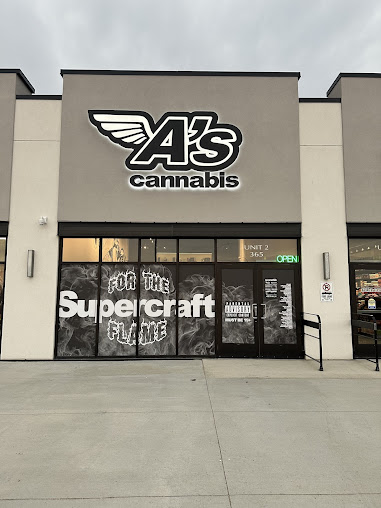
An end-to-end system that takes a retail hire and builds a credible, science-literate craft cannabis interpreter — someone who protects the consumer, elevates the category, and drives real loyalty through trust.
Language · Biology · Evaluation · Conversation · Culture
Why This Exists
Cannabis retail is broken by mediocrity.
Most dispensary floors operate on THC%, price, and what “sells well.” Consumers are left guessing. Ambassadors are left scripted. The Supercraft program exists to fix that from the inside out — through education that treats staff as professionals, not point-of-sale terminals.
PHASE 01–02
Language + Culture
Phase 01–02
FOUNDATION
The Science
Embedded throughout
PHASE 03
Evaluation + FQI
Phase 03
PHASE 04
Floor Execution
Phase 04
OUTCOME
Customer Journey
Every interaction
ONGOING
Culture + Cert
Always
The Problem
Menu selling dominates. Staff read from POS screens. “Menu selling vs guided discovery” is the gap Supercraft closes. Customers walk in with Google and walk out disappointed.
Most training in cannabis retail covers compliance, POS operation, and product names. None of it builds a sensory vocabulary, a scientific framework, or a conversation philosophy.
The Solution
A fully integrated education system built on three disciplines: sensory science (what makes flower flame), consumer psychology (how people buy and trust), and cultural identity (why Ambassadors protect the standard).
The result is a staff member who genuinely knows more than the customer — and uses that knowledge to serve them, not sell to them.
S Perceived expertise drives purchase trust. Consumer psychology research consistently shows that in high-uncertainty, high-involvement categories (cannabis qualifies on both dimensions), staff expertise is the #1 driver of initial purchase satisfaction and repeat visits — outperforming price, branding, and even product quality as reported factors. Training is not a cost. It’s the product.
The Three Non-Negotiables
What every Ambassador must internalize.
Never lead with price or THC
These are the least informative signals about cannabis quality. THC% has weak correlation with subjective experience. Price signals nothing about cultivation standard. Both destroy credibility instantly with any informed consumer.
If it’s not flame, we don’t force it
The Supercraft standard is a filter, not a sales mandate. Ambassadors are trusted precisely because they’re willing to say “this isn’t the right choice for what you’re after.” That honesty is what brings people back.
You are not a budtender. You are a guide.
The word “budtender” implies service execution. Supercraft Ambassadors are interpretation professionals — they bring knowledge, vocabulary, and a trained palate that the consumer cannot replicate on their own.
Phases 01 + 02
Language, Mindset
& Cultural Identity
Before an Ambassador can evaluate product, they need to speak a precise language and carry a clear identity. These two phases run in parallel — vocabulary without belief is performance; belief without vocabulary is noise.
Phase 01: Language Foundation
The Craft Vocabulary System
Eliminating imprecise retail language and replacing it with evaluation-driven terminology that is grounded in sensory science. Every word choice is intentional.
❌ Eliminate These Forever
“Good weed” — no evaluation criteria. Zero information. Collapses trust immediately with a knowledgeable customer.
“Strong” — THC% ≠ experience. Tolerance, ECS baseline, terpene profile, and metabolism all determine effect magnitude.
“This sells well” — social proof is not craft proof. You’re describing movement, not quality.
“It’s popular” — commodifies your expertise and positions you as a clerk, not a guide.
“You’ll be fine” — dismisses the consumer’s legitimate uncertainty and shuts down discovery.
✓ Replace With Precision Language
Structure: “Dense, hand-trimmed with intact trichome coverage across the bract surface.”
Aroma: “Loud myrcene base — very gassy, with a bright citrus lift. The profile stays complex all the way through.”
Cure: “Moisture balance is dialled — slight resistance on the squeeze, sticky resin transfer, burns clean.”
Burn: “White ash, consistent oil ring, smooth draw. No harshness.”
Effect: “Heavy, grounded body effect. Cerebral without raciness. Good for unwinding, not for a productive afternoon.”
S Language shapes perception (Sapir-Whorf hypothesis, applied): The vocabulary available to a person constrains the distinctions they can make. Ambassadors trained with precise sensory language evaluate product more accurately, describe it more credibly, and are perceived as more trustworthy by consumers — regardless of the product itself. The language upgrade is not just communication; it’s cognitive.
Trichome density
Resin gland coverage on bract surface. Correlates directly with cannabinoid and terpene mass. Assessed visually under 30–60× magnification.
Terpene profile
The full aromatic fingerprint — which compounds, in what ratios. More predictive of experience than THC% alone.
Water activity (Aw)
Free moisture level in cured flower. Optimal: 0.55–0.65 Aw. Governs texture, burn, and mould risk.
Entourage effect
Synergistic interaction between cannabinoids, terpenes, and flavonoids (Russo, 2011). Explains why whole-flower ≠ isolate THC.
Phytocannabinoid ratio
Proportion of THC, CBD, CBG, CBN etc. Ratios modulate pharmacology more meaningfully than any single compound.
Oil ring
Amber resin band at the burn line. Forms when terpenes vaporise ahead of the combustion front. Visible = high resin content + good cure.
White ash
Complete combustion product of flushed, clean flower. Black ash = residual mineral salts from unflushed synthetic nutrients.
Loud
High aroma intensity — room-filling, immediate on opening. Correlates with terpene concentration and freshness of cure.
Layered profile
Multi-note aroma that evolves: top notes (light volatile terps), heart notes, base notes. Superior to one-dimensional single-note profiles.
Fresh cure
Flower cured with adequate time (2–6 weeks min) under controlled humidity. Preserves terpene volatiles and eliminates chlorophyll off-notes.
Bract-forward
Trim style that preserves the calyx (bract) structure — the highest-trichome tissue — rather than stripping it for aesthetics.
Functional descriptor
Effect language tied to real-world application: “grounded,” “creative,” “clear-headed,” “sedative.” Replaces meaningless “indica/sativa” binary.
The Supercraft Sentence
A Narrative Scaffold — Not a Script
Every product explanation follows this structure. It becomes muscle memory through repetition but should never sound rehearsed.
The 5-Part Framework
“This is a [aroma/structure-led descriptor], grown by [producer], known for [craft credibility marker]. What stands out on evaluation is [1–2 specific FQI points]. It’s ideal for [functional experience].”
Example — Delivered Naturally
“This is a really dense, trich-heavy flower — grown by Coastal Craft, they’re small-batch out of BC and they’re meticulous about cure. What stands out is the aroma: very loud myrcene base, gassy with this lingering citrus lift. Burns white ash, clean oil ring — the cure is dialled. FQI scored AAAA from us. It’s going to give you a heavy body effect without the mental fog — ideal for evening wind-down.”
S Narrative transportation theory (Green & Brock, 2000): Consumers who receive information in narrative form (origin → process → outcome) show significantly higher message acceptance and memory retention than those who receive feature lists. The Supercraft sentence is a narrative arc, not a data dump — and this structure is supported by how the episodic memory system encodes product information for future recall.
Phase 02: Cultural Identity
What “For The Flame” Actually Means
This is not a tagline. It is a personal filter that every Ambassador internalises. The culture piece is what separates a trained staff member from a true Ambassador.
You are not a cashier
Cashiers execute transactions. Ambassadors interpret product, guide decisions, protect the consumer from mediocrity, and build category knowledge in the market. The distinction is identity-level, not just role-level.
You are not a “budtender”
The term implies service execution. “Budtender” is fine for a transactional retail model. Supercraft Ambassadors are in a different category — they evaluate, recommend, and stand behind their calls with the authority of someone who has done the work.
The Cultural Obligations
1. We don’t push product. If the margin favourite doesn’t meet the standard for what the customer needs, we say so. The short-term loss is a long-term trust investment.
2. We protect the consumer from mediocrity. There is more bad cannabis than good cannabis in the legal market. The Ambassador is the last line of defence between the consumer and a disappointing experience they’ll blame on the category — not the product.
3. We give honest evaluations, not aspirational ones. The FQI is not a marketing tool. An AAAA score means AAAA. A AAA score is communicated honestly and positioned correctly. Below AAA doesn’t reach the floor.
4. We close the loop with producers. Real feedback — what customers say, what we observe on evaluation — goes back to the growers. This is not a typical retail relationship. This is a quality feedback loop.
Producer Storytelling Exercise
Every Ambassador prepares a 3-minute brand presentation covering: origin story, cultivation philosophy, what earns them Supercraft placement, and how they’d position this brand on the floor.
Presentation Structure
Who grows it: Name, region, team size, operation scale. The human story behind the product.
How they grow it: Growing medium, lighting, genetic sourcing, harvest method, cure process, batch size. Technical credibility.
Why it’s flame: The specific qualities — verified through FQI evaluation — that meet the Supercraft standard. Not marketing language. Sensory evidence.
How you’d present it: Deliver the Supercraft Sentence for their lead product. Out loud, to the group.
Scientific Foundation — Embedded in All Phases
The Biology & Chemistry Behind Flame
Ambassadors don’t need a biochemistry degree. But understanding the mechanisms behind what they’re evaluating makes the vocabulary meaningful — not performative. This is the “why” behind every evaluation criterion.
Module 1: Terpenes
The True Fingerprint of Cannabis
Over 200 terpenes have been identified in Cannabis sativa. They are volatile aromatic compounds synthesized alongside cannabinoids in trichome heads. They drive aroma, modulate effect, and degrade rapidly above 70°C — which is why cure and storage matter as much as genetics.
Myrcene
Earthy · Musky · Grape
Most abundant in most cultivars. Sedative at high concentrations in animal models. Enhances cannabinoid cell membrane permeability. The primary driver of “couch-lock” body effect.
β-Caryophyllene
Pepper · Spice · Fuel
The only terpene with direct cannabinoid receptor activity — binds CB2. Anti-inflammatory in multiple peer-reviewed trials. Responsible for “gassy” and “fuel” aroma notes. Also present in black pepper and clove.
Limonene
Citrus · Bright · Clean
Second most common. Rapidly absorbed through inhalation. Studied for anxiolytic and antidepressant properties. Produces an uplifting, energising sensory profile. Associated with mood elevation.
Linalool
Floral · Lavender · Soft
Potent anxiolytic — modulates GABA-A receptors (similar pathway to benzodiazepines). Strong clinical evidence in human studies. High-linalool cultivars are associated with stress and anxiety relief without heavy sedation.
α-Pinene
Pine · Fresh · Sharp
Bronchodilator — may counteract THC-induced airway restriction. Studied as an acetylcholinesterase inhibitor, suggesting potential memory support. Crisp, fresh, high-altitude aroma character.
Terpinolene
Herbal · Floral · Faint
Least common of the major six but highly distinctive when present. Sedative and antioxidant properties in vitro. Associated with “hazy” and “old-school” cultivar profiles. Often dominant in Durban Poison phenotypes.
Terpene Prevalence
AVG. % OF TOTAL TERPENE MASS — CANADIAN CRAFT CULTIVARS
Six primary terpenes — ranked by typical abundance. Individual cultivars vary significantly. β-Caryophyllene is the only terpene classified as a dietary cannabinoid.
Terpene
Prevalence & Primary Effect
Avg %
Myrcene
Earthy · Musky · Grape
Sedative at high concentration · enhances membrane permeability · primary couch-lock driver
2.2
β-Caryophyllene
Pepper · Spice · Fuel
CB2 AGONIST
Only terpene with direct cannabinoid receptor activity · anti-inflammatory · no psychoactivity
Least common of the six · highly distinctive when dominant · sedative + antioxidant in vitro · Durban Poison marker
0.3
Source: indicative avg. across publicly available Canadian LP certificates of analysis · individual cultivar variance is significant · data for training purposes
S Russo, 2011 — Entourage Effect (British Journal of Pharmacology): Ethan Russo’s landmark review established that cannabinoid-terpenoid interactions produce synergistic pharmacological outcomes neither class achieves alone. This is why recommending on THC% is not just bad retail practice — it’s scientifically inaccurate. The full phytochemical fingerprint determines the experience.
Module 2: Endocannabinoid System
Why Every Customer Has a Different Experience
The ECS is a biological signalling system present in all vertebrates. It is the reason two people can consume identical product and report completely different experiences. Ambassadors need this to explain variability without confusion.
CB1 Receptors Central Nervous System
Concentrated in the brain and spinal cord. THC’s psychoactive effects result from partial CB1 agonism. Long-term use leads to receptor downregulation — the biological basis of tolerance. Naive users have higher receptor sensitivity; the same dose produces stronger effects.
CB2 Receptors Immune + Peripheral
Expressed primarily in immune tissue and peripheral organs. Modulates inflammation, not intoxication. β-Caryophyllene directly agonises CB2 — explaining the anti-inflammatory properties of caryophyllene-dominant cultivars without psychoactive contribution.
Endocannabinoid System — Receptor Map
CB1 vs CB2 — WHERE, WHAT, WHY IT MATTERS
Two receptor types. Completely different locations. Completely different effects. This is why the same terpene can produce anti-inflammatory relief without any psychoactivity.
CB1
Cannabinoid Receptor Type 1
LOCATION
Brain · Spinal cord · Central nervous system
ACTIVATED BY
THC (partial agonist) · anandamide (endogenous)
PRIMARY EFFECT
Psychoactivity · appetite · pain modulation
TOLERANCE MECHANISM
Receptor downregulation with repeated use
FLOOR IMPLICATION
Naive users have maximum CB1 sensitivity — same dose hits harder. Experienced consumers have downregulated receptors. Never assume equivalent response to identical product.
CB2
Cannabinoid Receptor Type 2
LOCATION
Immune tissue · gut · peripheral organs
ACTIVATED BY
β-Caryophyllene (full agonist) · CBD · 2-AG
PRIMARY EFFECT
Anti-inflammatory · immune modulation · no intoxication
PSYCHOACTIVITY
None — zero intoxicating effect
FLOOR IMPLICATION
A caryophyllene-dominant cultivar delivers measurable anti-inflammatory benefit through CB2 activation — without altering psychoactive experience at all. This is a specific, science-backed recommendation you can make with confidence.
Why Dosing Varies So Widely Between Individuals
CYP2C9 and CYP3A4 enzyme polymorphisms govern THC metabolism rate in the liver. Approximately 10% of the population are “poor metabolisers” — they process THC significantly slower, resulting in stronger and longer-lasting effects from identical doses. This is not a tolerance issue; it’s genetic.
Body composition: THC is lipophilic — it binds to adipose tissue. Higher body fat percentage creates a reservoir effect, extending duration and delaying onset variability on subsequent uses.
ECS baseline tone: Endogenous anandamide levels vary significantly between individuals based on genetics, stress levels, and diet. People with higher baseline anandamide tone often report less pronounced cannabis effects.
The Ambassador’s role: When a consumer says “cannabis doesn’t work for me” — this is almost always a dose, route, or product profile mismatch, not a biological impossibility. Ambassadors diagnose this, not dismiss it.
Module 3: Cure Chemistry
Why Post-Harvest Decisions Define Quality
Elite genetics grown in perfect conditions can be completely ruined by a poor cure. A skilled cure can elevate good genetics to exceptional product. This is the most underappreciated quality variable in the market.
Chlorophyll Breakdown
Green chlorophyll degrades via enzyme activity during cure, eliminating the harsh “hay” and “green” off-notes. Requires 2–6 weeks minimum at 58–62% RH. Rushed drying halts this process permanently — the chlorophyll stays, and so does the harshness.
Terpene Preservation
Monoterpenes (lighter volatiles: limonene, pinene) begin evaporating above 21°C. Each degree above 25°C measurably accelerates loss. Controlled temperature during cure is not optional — it determines whether the genetic terp potential is actually delivered to the consumer.
THCA Stability
Proper cure preserves THCA in its non-psychoactive acid form until the consumer applies heat (decarboxylation). Premature decarboxylation from excessive drying heat converts THCA to THC pre-consumption, altering the cannabinoid ratio and reducing the anticipated potency at point of use.
Cure Outcomes by Method
WHAT CHANGES AT EACH STAGE — AND WHY IT CANNOT BE REVERSED
The cure window is the single most impactful post-harvest variable. Once rushed, the damage is permanent. Chlorophyll stays. Terpenes are lost. The product is set at its worst version.
RUSHED
3–5 days · high heat
ADEQUATE
14–21 days · controlled
IDEAL
28–42+ days · 58–62% RH
Chlorophyll
Harsh off-notes
HIGH — locked in
Enzymatic degradation halted permanently. Hay, green, and harsh notes present in finished product.
PARTIAL breakdown
Detectable improvement. Residual off-notes may remain. Inconsistent across batch.
FULLY degraded
Clean, smooth draw. No green off-notes. Flavour profile matches terpene genetics fully.
Most heavier sesquiterpenes preserved. Light monoterpenes reduced. Aroma present but muted at top notes.
MAX preservation
Full genetic terpene expression delivered to consumer. Aroma loads the room on opening. Effect matches profile.
Water Activity
Target: 0.55–0.65 Aw
<0.55 Aw — too dry
Trichome heads fracture on handling. Resin lost to fingers and packaging. Harsh, crumbly texture. Burns too fast.
~0.60 Aw
Approaching ideal. Slight spring-back on compression. Acceptable burn. Minor resin transfer to fingers.
0.55–0.65 Aw ✓
Spring-back holds shape. Resin transfers to fingers without wetness. Burns evenly. Mould risk eliminated.
Burn Result
FQI burn score
0–8 /20
Black ash · no oil ring · harsh draw · below AAA threshold
10–14 /20
Grey-white ash · faint ring · acceptable draw · AAA range
16–20 /20
White ash · clear oil ring · smooth draw · AAAA–AAAAA range
S Water activity science (Integr8, 2020–2022): Optimal water activity for cannabis is 0.55–0.65 Aw. Below 0.55: trichome heads fracture on handling, releasing resin that is lost — sticky fingers, lighter product. Above 0.65: Botrytis and Aspergillus mould spore germination risk, cannabinoid degradation, poor combustion. The tactile evaluation (slight spring-back, resin transfer to fingers without wetness) is a direct sensory proxy for Aw measurement.
Module 4: Burn Science
What Combustion Tells You
Ash Colour — Mineral Science
White/light grey ash is the combustion product of flower with low residual mineral salts. It indicates the cultivator flushed the growing medium for 7–14 days pre-harvest with plain water, clearing nitrogen, potassium, and phosphorus salt accumulation from plant tissue.
Black or dark grey ash = residual nutrients still present in plant tissue at harvest. These produce incomplete combustion, tar deposits, and harsh draw. Not a calibration issue — a cultivation decision.
Oil Ring — Resin Confirmation
The amber ring visible at the burn line forms when terpenes and cannabinoid resins vaporise ahead of the combustion front — ahead of the heat, the resin melts and migrates outward, forming the visible ring.
A clear, consistent oil ring confirms high resin concentration and a proper cure that preserved the volatile compounds. An absent ring: low terpene content, poor cure, or product that has been stored improperly and lost its volatile fraction.
Burn Science — Reading the Evidence
ASH COLOUR + OIL RING — WHAT THEY PROVE
Two visual signals. Both are direct readouts of cultivation and cure decisions that were made weeks before you ever touched the product.
ASH COLOUR
WHITE ← IDEAL GREY BLACK → FAIL
White ash — what it means
7–14 day pre-harvest flush with plain water clears accumulated N, K, P mineral salts from plant tissue. Low salt content = complete, clean combustion = white ash.
Dark ash — what it means
Residual nutrients still in plant tissue at harvest. Incomplete combustion. Tar deposits on hardware. Harsh, chemical draw. This is a cultivation decision — not a calibration issue. It cannot be fixed post-harvest.
FQI CRITERION 4 — BURN QUALITY
White or very light grey ash = 16–20 pts · Grey = 10–15 · Dark grey or black = 0–9
Low terpene content · poor cure · improper storage · volatile fraction degraded or lost
AMBASSADOR NOTE
A product with absent oil ring should not earn above AAA regardless of other scores. The resin is simply not there. Recommend accordingly — or don’t recommend it at all.
Phase 03
Evaluation Mastery
& The Flame Quality Index
The FQI is not a rating system for marketing. It is a repeatable sensory evaluation tool that produces consistent, calibrated assessments of cannabis quality — regardless of who is scoring.
The 5-Step Evaluation Flow
Always performed in this order.
Sequence matters. Visual assessment before aroma prevents contamination of the visual impression by scent priming. Texture before burn ensures the cure read is independent of combustion conditions.
1
Visual Inspection — Structure, Trim, Trichomes
Assess bud architecture, trim quality, and trichome coverage before any handling disturbs the surface. Use magnification (30–60×) for trichome assessment.
“Look for density, intact trichome heads across the bract surface, and clean trim lines that didn’t sacrifice resin-rich tissue for aesthetics.”
Open the container and immediately assess intensity (“loudness”). Then move to complexity — is it a single flat note or does it evolve across your breath? Then freshness — are the volatile top notes present, or has the profile flattened?
“Loud, layered, fresh. Those are the three words. If any one is missing, score accordingly.”
Apply gentle pressure to one bud. Assess spring-back (not crumble, not sponge). Assess resin transfer to fingers. Then break down a small amount and assess how it separates — clean and sticky, or dry and powdery, or wet and matted?
“Optimal cure feels like the product has a bit of life in it. It wants to hold its shape but yields cleanly.”
4
Burn Test — Ash, Oil Ring, Draw Smoothness
Advanced assessment — performed by Level 2 Evaluators and above. Assess ash colour at the 1/3 mark (white/grey = clean; black = nutrient residue). Look for oil ring presence. Assess draw smoothness and throat feel.
“White ash and a clean oil ring are the burn equivalent of a perfect score on cure. If either is absent, find out why before you recommend it.”
Where applicable and appropriate: assess onset speed, effect profile using functional descriptors, duration, and whether the experience matches the aroma and terpene promise. Effect should be evaluated blind where possible to avoid confirmation bias.
“Does it deliver what the terp profile promised? A loud myrcene cultivar should feel heavy. A bright limonene profile should feel uplifting. If the aroma and effect don’t match — something happened between the grow and your hands.”
FQI Live Scorer
Flame Quality Index™
Flame Quality Index™
FQI FULL · /100 · AAA TO AAAAA GRADING SYSTEM
Structure / Form
15
Aroma / Terpenes
17
Cure / Moisture
16
Burn Quality
14
Effect / Experience
15
Grade
FQI Score
Description
Floor Positioning
AAAAA
90–100
Exceptional. Reserve or collector tier. Rare.
“This is something I’d personally set aside.”
AAAA+
80–89
Premium. Connoisseur daily driver.
“Consistently above the noise.”
AAAA
70–79
Excellent. Strong craft product.
“Solid — strong on [specific evaluation point].”
AAA+
60–69
Good. Above-average quality.
Honest positioning for the right customer.
AAA
50–59
Acceptable. Entry-level quality.
Right customer, right context. No apologies.
Below AAA
0–49
Does not meet Supercraft standard.
“We don’t carry this.”
Calibration Protocol
Consistent evaluation requires calibration. These exercises are run throughout the first two phases and monthly thereafter.
Blind Panel Evaluation
Three or more Ambassadors score the same product independently, without sharing results. Scores are compared. Variance greater than ±5 on any criterion triggers a discussion and re-score. The goal is not consensus — it’s understanding the source of divergence.
All of the evaluation knowledge and vocabulary means nothing if it can’t be delivered naturally in a real conversation. Floor skills training is where knowledge becomes instinct — through repetition, role-play, and live debrief.
⚑
Core Non-Negotiable: Never lead with price or THC percentage. Every interaction starts with the customer’s experience — not the menu.
S Why THC-first is scientifically invalid: A 2021 study in Addiction (University of Colorado) found that THC concentration was a poor predictor of subjective intoxication and a very weak predictor of consumer satisfaction. Tolerance variation, ECS baseline differences, and terpene profile all outperformed THC% as experience predictors. Leading with THC% is not just poor service — it’s misleading.
The 4-Step Floor Flow
Every conversation, every time.
The four steps are a framework, not a script. They can expand or compress based on the customer. A 2-minute interaction still runs through all four in abbreviated form.
1
DISCOVER — Open with experience, not menu
The single most important step. One open question, fully listened to before any response. The goal is diagnostic — understand what the customer has enjoyed, what they’re looking for, and the context of use before touching the menu.
“What have you been enjoying lately, or is there a specific experience you’ve been trying to find?”
S Motivational interviewing (MI) evidence: Open-ended discovery questions increase self-disclosure and engagement by 40%+ compared to yes/no gatekeeping. The single-question rule is also supported by working memory research — people respond more fully and honestly to one question than to multiple simultaneous prompts.
2
ALIGN — Reflect using craft vocabulary
Mirror the customer’s language back — but upgrade the vocabulary. Confirm your understanding of their needs while subtly raising the sophistication register of the conversation. This positions you as an expert without being condescending.
“So you’re after something with a heavier body effect — more grounded, leaning into that myrcene-dominant profile? And you mentioned anxiety is a concern, so we want to avoid high-limonene, anything that might feel racy?”
3
EDUCATE — Lead with evaluation, not promotion
This is where the FQI training becomes conversation. Describe the product through your evaluation lens — structure, aroma, cure, burn, effect. Reference the producer. Give the FQI grade. Make the recommendation feel like analysis from someone who has done the work, not a sales pitch.
“This one is a AAAA from us. It’s a heavy myrcene profile — very loud on the open, gassy with a dark fruit base. The cure is dialled: white ash, clean oil ring, burns smooth. It’s grown by a small BC operation that’s meticulous about moisture and trim. Body-heavy, grounded, no raciness. Exactly what you described.”
4
GUIDE — Stand behind it, don’t push it
The close is a personal endorsement — not a hard sell. The Ambassador has evaluated this product and believes in the recommendation. They say so directly. And they invite the customer back if it doesn’t land — turning a purchase into the start of a trust relationship.
“If what you’re after is quality over hype, this is something I’d stand behind. If it doesn’t land the way you were expecting, come back and let’s figure out what to dial in. That’s what we’re here for.”
S Cialdini’s commitment + reciprocity principles: A non-pressured personal endorsement (“I’d stand behind it”) activates reciprocity norms without triggering psychological reactance. The “come back if it doesn’t hit” close inverts the typical retail transaction — it signals long-term relationship investment and is the single greatest driver of retail customer lifetime value.
Customer Archetypes
Reading the Room — Six Core Profiles
Every customer is different. Ambassadors are trained to identify archetype signals in the first 30 seconds and adjust their approach accordingly — without being formulaic.
🌱
The Curious First-Timer
Signals: Hesitant, vague, asking “where do I start”
New to legal cannabis. High uncertainty, high trust requirement. Doesn’t know what they don’t know. Needs permission to ask “dumb questions” and a guide who makes them feel safe, not judged.
Approach: Start extra-low. Accessibility first. Explain the entourage effect simply. Use functional descriptors only. Skip terpene jargon unless they lean in. Reassure them that coming back is expected and welcome.
🔁
The Habitual Consumer
Signals: Knows their usual, asks for it by name or strain
Has a routine and trusts it. Not necessarily looking for an upgrade — but can be elevated if the conversation earns it. The risk here is dismissing their preference to push something “better.”
Approach: Honour their usual first. Then introduce one lateral comparison using their preference as the reference point. Never tell them their usual is inferior — show them what else exists at the same or higher quality.
🔬
The Informed Connoisseur
Signals: Knows terpenes, asks about genetics, references growers
Has done their homework. Expects to be met at their level. Will lose respect for an Ambassador who can’t match their vocabulary or knowledge depth. This customer is the fastest trust-build opportunity — if you can keep up.
Approach: Go deep immediately. Lead with terpene profile, FQI score, producer specifics, cultivation method. Skip the basics. This is the customer who will become an evangelist if you earn it.
💰
The Value Seeker
Signals: Asks about price first, compares by price-per-gram
Budget is the primary filter — but this doesn’t mean quality is irrelevant. Most value seekers have been burned by bad cheap product and are open to understanding what they’re buying if the Ambassador explains it without condescension.
Approach: Find the best quality product in their budget. Be honest about the trade-offs. Use the FQI to explain why a mid-tier product at their price point is still an honest choice — and what specifically makes it earn its place on the shelf.
Has a specific goal. May be replacing or supplementing a pharmaceutical. Will have tried things that didn’t work. Needs the Ambassador to take their context seriously and make a recommendation based on function, not popularity.
Approach: Ask specifically about what they’ve tried and what worked or didn’t. Match terpene profile to stated need (linalool for anxiety, myrcene for sleep, caryophyllene for inflammation). Note that you’re not providing medical advice — but you can explain the science behind how terpenes modulate effect.
🎁
The Gift Buyer
Signals: “I’m buying for someone else,” asks for “the best”
Buying for someone with unknown preferences. High anxiety about making the wrong choice. Most likely to be upsold because they don’t know what they’re buying — Ambassadors should resist this and earn the trust instead.
Approach: Ask about the recipient’s experience level and any known preferences. Use the AAAA or AAAA+ tier as the gift recommendation. Explain what makes it excellent. Offer a short explanation they can relay to the recipient — give them language they can use.
Role-Play Assessment Protocol
Used for Level 2 and Level 3 certification. Assessor plays one of the six archetypes without announcing which one. Ambassador must identify signals and adapt within 60 seconds.
Assessment Criteria
Did the Ambassador complete all 4 steps of the floor flow? Did they avoid leading with price or THC? Did they use at least 3 precision vocabulary terms appropriately? Did they reference the producer and/or FQI score? Did they close with a personal endorsement (not a hard sell)?
Debrief Structure
Immediately after each role-play: Ambassador self-assesses first. Then assessor provides specific, evidence-based feedback. Group debriefs weekly — hearing others’ approaches is training in itself. Record and replay (with consent) for high-value learning moments.
The End-to-End Customer Experience
Every Touchpoint, Every Interaction.
The customer experience doesn’t start when they walk in the door and end when they pay. It’s a continuous arc that Supercraft Ambassadors own from awareness to advocacy. Here is every stage — and the Ambassador’s role at each one.
Full Customer Journey
From First Impression to Long-Term Advocate
8 stages. Each one is an opportunity to either build trust or lose it. Ambassadors are trained on all of them — not just the in-store conversation.
1
Pre-Visit — Online Presence & Reputation
Before they walk in
The customer’s first impression of Supercraft often happens before they set foot in the store. Online reviews, social media, word of mouth, and the menu on third-party platforms all shape expectations. Ambassadors contribute to this through review responses, social content authenticity, and simply being talked about by satisfied customers.
Ambassador role here: Encourage satisfied customers to leave specific reviews — not star ratings, but written accounts of the conversation and recommendation. Specific reviews attract customers who want exactly that experience.
The Supercraft reputation is built one honest recommendation at a time. Each excellent interaction is a future customer walking in with high expectations — which the program is built to meet.
2
Entry — First 30 Seconds in Store
The welcome and the read
The moment a customer enters, Ambassadors read signals: body language, pace, eye contact, what they look at first. An experienced connoisseur scans the top shelf immediately. A first-timer hesitates at the door, looks around, and waits for permission. A habitual consumer heads straight to the counter they know.
What to do: Acknowledge immediately. Not a transactional “how can I help you” — but a warm, unrushed open. Make eye contact. Let them settle before approaching.
What never to do: Let a customer stand at the counter reading a menu without being engaged. The menu is not the interaction — the Ambassador is.
Research on service recovery shows that the first 30 seconds of an interaction determine whether a customer will self-disclose their real needs or stay in “defensive browser” mode. Ambience and greeting quality predict disclosure rate.
3
Discovery — The Open Question
Diagnostic, not interrogative
One open question. Fully listened to before any response. The entire 4-step floor flow depends on the quality of what is learned here. Ambassadors resist the instinct to fill silence after the question — allow the customer to think, to elaborate, to show where they actually are.
Strong openers: “What have you been enjoying lately?” / “Is there a specific experience you’re looking to find?” / “What’s been working for you, and is there anything that hasn’t?”
Weak openers: “Are you looking for indica or sativa?” (false binary) / “Do you want something strong?” (THC-first) / “What’s your budget?” (price-first)
4
Recommendation — The Evaluation-Led Moment
This is what the whole program builds toward
The Ambassador delivers a recommendation using the Supercraft Sentence Framework — backed by FQI evaluation, producer story, and terpene knowledge. The recommendation is specific, credible, and honest. It positions the Ambassador as someone who has done the work, not someone reading off a screen.
If the right product for this customer isn’t on the floor that day, the Ambassador says so. “The cultivar that would be perfect for what you’re describing isn’t in right now — here’s what comes closest, and here’s why. I’d suggest checking back in [timeframe].”
This moment is the differentiator. No other retailer does this with this level of expertise. Every time it happens, it creates a story the customer will tell.
Ambassador insight: The recommendation doesn’t need to be the most expensive product. It needs to be the right product. Recommending a AAA product because it’s genuinely the right match — over a AAAA+ that doesn’t fit — is the move that builds lifetime loyalty.
5
Checkout — Closing the Loop
Not a transaction. A handoff.
The checkout interaction is not a formality. It’s where the Ambassador completes the narrative by giving the customer language to take home — a simple phrase that helps them explain to a friend what they just bought and why it’s excellent.
What to do at checkout: Recap the one or two reasons this product earned its recommendation. Give them one piece of information they can repeat — the producer’s name, the terpene profile that drives the effect, the fact that it scored AAAA. Make them feel like they know something.
Storage reminder: Briefly remind them to store in a cool, dark place away from direct light and heat — this protects the terpene profile they just paid for. Mention the ideal RH if they have a humidor. This is expertise in action, not upselling.
6
Post-Purchase — The Follow-Up Relationship
After they leave
The invitation at the end of step 4 — “come back and let’s figure out what to dial in” — is not a pleasantry. It’s a standing offer that must be honoured when they return. When a returning customer walks in, Ambassadors recognise them, reference what they bought last time, and ask how it landed.
The feedback loop: What customers report about product experience goes back into the Ambassador’s evaluation notes. If multiple customers report that a specific product didn’t deliver as expected, that’s a data point that reaches the buying team and, ideally, the producer.
Consumer psychology: The single highest predictor of a customer returning to a retail cannabis store is whether they felt the staff “understood what I was looking for.” Not price. Not product selection. Understanding. That is an Ambassador skill.
7
Loyalty — The Relationship Stage
When they ask for you by name
The goal of the Supercraft customer experience model is not repeat visits — it’s a relationship. A customer who asks for a specific Ambassador by name, who trusts that person’s evaluation unconditionally, who brings friends and references them by name in those conversations — this is the Supercraft outcome.
How to maintain it: Stay educated. Know what’s new. Know what dropped off and why. When a customer returns, have something to show them — a new producer, a new cultivar that matches their profile, something you evaluated and knew would be right for them before they even asked.
8
Advocacy — The Customer Becomes the Ambassador
The highest outcome
A Supercraft customer who has been well-served becomes an unpaid Ambassador in their own network. They use the vocabulary they’ve absorbed from interactions. They recommend the store because they recommend the experience. They explain to their friends why “you should ask for [Ambassador name].”
This is not engineered. It is earned — through every step of the journey above, executed with expertise, honesty, and genuine care for the consumer’s experience.
Word-of-mouth in cannabis is disproportionately powerful. Unlike most consumer categories, cannabis purchases are rarely shared on public social media — meaning trust travels through private conversations. A single converted advocate can drive 5–10 new customers with zero acquisition cost.
Difficult Moments on the Floor
When Things Don’t Go to Plan
Ambassadors are trained for these — not to avoid them, but to handle them with competence and honesty.
The customer had a bad experience last time
Acknowledge it directly. Ask what happened. Identify whether it was product mismatch, dose mismatch, or a genuine quality issue. Don’t be defensive about the product or the store. Use it as a diagnostic entry point to find what will actually work this time.
The customer insists on knowing THC%
Give them the number — never withhold it. Then explain why it’s one data point, not the whole picture. “It’s 28% THC — and the terpene profile is going to drive more of your experience than that number. Here’s what the terps are doing…”
The customer knows more than you about something
Say so. “I haven’t dug deep on that specific cultivar — you clearly have. What’s your read on it?” Expertise is never threatened by acknowledging a gap. It’s threatened by pretending one doesn’t exist. Curiosity and honesty are credibility signals.
Nothing on the floor meets the standard for this customer
Be honest. “What you’re describing — I don’t have the exact right match in right now. Here’s the closest, and here’s what’s coming in. I’d genuinely suggest waiting, or here’s what I’d pick as the bridge if you need something today.”
Ongoing — The Living Standard
Culture, Cadence
& Certification
The program doesn’t end at Phase 04. The most important training is the ongoing kind — the weekly evaluations, the monthly brand sessions, the quarterly refreshes that keep Ambassadors sharper than anyone else in the market.
Ongoing Training Cadence
What Happens Every Phase, Month, Quarter
Weekly
Product Deep Dive: One product evaluated as a group using the full 5-step flow and FQI scoring. Individual scores compared before discussion. Discrepancies explored. Producer notes reviewed. Supercraft Sentence drafted for this product as a team.
Weekly
Group Evaluation Session: Blind aroma assessment (2–3 smell jars from the reference set). Visual trichome assessment under magnification. Brief texture + cure evaluation without scoring — just vocabulary practice. 15 minutes. No skipping.
Monthly
Brand PK Session: One producer presents (in person, video, or via brand materials) — cultivation philosophy, new drops, what makes their product flame. Ambassadors ask questions. Notes captured. Brand card updated. This is not a sales presentation — it is knowledge transfer.
Monthly
“Best of the Best” Internal Ranking: All current SKUs evaluated and ranked by the Ambassador team using FQI scores. The ranking is honest — products that have slipped are noted and communicated to the buying team. Products that consistently earn AAAA+ are nominated for feature positioning.
Quarterly
Certification Refresh: All Ambassadors re-sit their level assessment. Standards drift. Calibration drifts. The refresh resets baseline and surfaces any knowledge gaps that have developed. It is not punitive — it is professional maintenance.
Quarterly
Top Performer Recognition: The Ambassador with the highest customer trust signal (return visit attribution, specific review mentions, internal feedback) is recognised — not just for sales. Recognition based on quality of interaction, not volume.
Ongoing
Producer Direct Access: Senior Ambassadors (Level 3) have direct communication lines to key producers. Real feedback — what customers report, what evaluation reveals — flows directly back to the growers. This closes the loop between retail and cultivation in a way no competitor can replicate.
Certification System
Three Levels of Mastery
Certification is not a checkbox. It’s a credibility marker earned through demonstrated competency — not just training completion.
LEVEL 1
Foundation Ambassador
Delivers the Supercraft Sentence Framework fluently. Understands craft vs commercial distinction. Knows the FQI five criteria and can describe each with scientific rationale. Passes a written vocabulary assessment (30 terms, 80% threshold). Completes a supervised floor interaction with debrief.
Phase 01–02
LEVEL 2
Certified Evaluator
Independently scores any product on the FQI with ≤±5 point variance from panel consensus. Passes blind aroma assessment: correctly identifies 4/6 reference terpene profiles. Delivers the 4-step floor flow across all three assessed customer archetypes in role-play. Can explain the entourage effect, ECS basics, and cure chemistry without notes.
Phase 03–04
LEVEL 3
Lead Ambassador
Trains and assesses other Ambassadors. Leads weekly evaluation sessions. Contributes to internal FQI scoring calibration. Correctly identifies 5/6 reference terpene profiles blind. Maintains active relationship with at least 2 producers. Acts as quality filter between buying team and floor — has veto authority on product that does not meet standard.
Ongoing
Assessment Methods
Blind Aroma Assessment
Sealed smell jars containing isolated reference terpene profiles. Ambassador identifies profile from aroma alone, with no visual or contextual cues. Tests genuine sensory training vs memorised associations. Conducted at Level 2 and refreshed quarterly.
FQI Calibration Panel
Ambassador scores an unknown product on all 5 criteria independently. Score compared to panel consensus. Variance of ±5 or less = pass. Variance greater than ±5 on any single criterion = targeted re-training on that criterion specifically.
Floor Scenario Role-Play
Assessor plays three of the six archetypes without announcing which. Ambassador identifies signals and adapts within 60 seconds. Must complete all 4 floor flow steps, avoid THC/price lead, use 3+ precision vocabulary terms, and close with a personal endorsement.
Producer Presentation
Each Ambassador presents one brand at Level 1: origin, cultivation philosophy, why it meets Supercraft standard, and how they’d position it on the floor. Delivered live to a peer group. 3 minutes. Assessed on accuracy, vocabulary, and genuine conviction.
The Tools
Evaluation TraysStandardised matte surface for visual assessment — no reflective glare, consistent background colour
30–60× MagnifiersHandheld loupes for trichome assessment. Pocket-sized for floor use
Brand CardsProducer story, cultivation method, FQI history, and current Supercraft Sentence — updated at every monthly PK session
FQI ScoresheetPhysical and digital. Archived per product per session — builds a quality history over time
Digital Product ProfilesFuture layer: live database of FQI scores, terpene data, producer notes, customer feedback — accessible on floor
We don’t sell cannabis.
We interpret it. We validate it.
We protect the consumer from mediocrity.
Every Ambassador who completes this program carries the Supercraft standard as a personal commitment — not a job function. The training is the culture. The culture is the product.
function show(id){
document.querySelectorAll(‘.panel’).forEach(p=>p.classList.remove(‘active’));
document.querySelectorAll(‘.nav-link’).forEach(l=>l.classList.remove(‘active’));
document.getElementById(‘panel-‘+id).classList.add(‘active’);
const map={overview:0,ambassador:1,science:2,evaluation:3,floor:4,customer:5,culture:6};
document.querySelectorAll(‘.nav-link’)
function calcFQI(){
let total=0;
for(let i=1;itotal>=x.min);
document.getElementById(‘fqi-grade’).textContent=g.grade;
document.getElementById(‘fqi-desc’).textContent=g.desc;
}
Since stores have varying inventory levels, the item below will be adjusted based on the stock availability at that location. Are you sure you want to proceed with changing locations ?